

SMB Secrets Revealed: How Small Businesses Are Accessing Enterprise-Level Automation
- Tamika Shanea’ Robinson

- Jan 7
- 5 min read
Remember when enterprise-level automation was reserved for Fortune 500 companies with million-dollar IT budgets? Those days are officially over. Small and medium-sized businesses are now wielding the same powerful automation tools that once gave big corporations their competitive edge: and they're doing it without breaking the bank or hiring a team of tech wizards.
The secret isn't just about finding the right tools. It's about understanding how savvy SMB owners are strategically implementing these solutions to level the playing field. Today, we're pulling back the curtain on exactly how small businesses are accessing enterprise-grade automation, complete with real examples, actionable steps, and myth-busting insights that'll change how you think about scaling your operations.
The Underdog Story: How Keisha Built an Empire with $50/Month

Meet Keisha Williams, founder of Radiant Wellness Collective, a Black-owned wellness brand that started in her Chicago apartment just three years ago. Today, her business manages over 2,000 monthly subscribers, coordinates with 15 wellness practitioners across four states, and processes thousands of orders: all while maintaining the personal touch that made her brand special.
The kicker? Keisha's entire automation infrastructure costs her less than $200 monthly.
"When I started, I was manually sending welcome emails, scheduling appointments, tracking inventory, and following up with customers," Keisha explains. "I was working 16-hour days and still falling behind. I knew big wellness companies had systems that handled all this automatically, but I thought those tools were out of reach for someone like me."
Everything changed when Keisha discovered she could access the same caliber of automation that enterprise companies use, but through flexible, SMB-friendly platforms. Her transformation illustrates perfectly how small businesses are democratizing enterprise-level efficiency.
The Enterprise Automation Revolution: It's Not What You Think
The traditional model of enterprise automation: massive upfront investments, complex implementations, and dedicated IT teams: has been completely disrupted. Smart SMBs are now accessing enterprise-level capabilities through three key strategies:
Tiered Pricing Models That Scale With Growth Instead of purchasing expensive enterprise licenses, businesses start with basic automation features and scale up as they grow. Zapier connects over 8,000 apps, allowing small teams to automate workflows without coding. Make enables agencies to automatically update CRMs, generate invoices, and send notifications: all starting at affordable monthly rates.
Cloud-Based Platforms With Visual Interfaces Gone are the days when automation required programming knowledge. Modern platforms offer drag-and-drop workflow builders that make complex automations accessible to anyone. Xero automates accounting tasks like bank reconciliation and invoicing without requiring an accounting background.
Modular Implementation Approach Rather than overhauling entire systems, successful SMBs start with one high-impact workflow and expand incrementally. This approach delivers immediate value while building automation confidence and capabilities over time.
Industry-Specific Success Stories: Automation in Action

The beauty of modern automation lies in its adaptability across industries. Here's how different sectors are leveraging enterprise-level tools:
Retail: The Inventory Management Game-Changer Marcus Thompson's boutique sneaker store in Atlanta uses automated inventory management that rivals major retailers. When stock hits preset levels, his system automatically reorders from suppliers, updates his website inventory, and sends restocking alerts. The result? Zero stockouts during high-demand drops and 40% less time spent on inventory management.
Creative Services: Project Management on Autopilot Sarah Chen's graphic design agency automates client onboarding, project tracking, and invoice generation. When a new client signs a contract, her system automatically creates project folders, schedules check-in meetings, sends welcome packets, and sets up payment reminders. This automation freed up 15 hours per week that she now spends on creative work and business development.
Wellness Services: Customer Journey Automation Beyond Keisha's story, wellness practitioners are automating appointment scheduling, sending personalized health tips based on client goals, and managing supplement subscriptions. These automations maintain the personal touch clients expect while scaling operations efficiently.
Myth-Busting: The Truth About Automation Accessibility

Let's address the elephant in the room. Several persistent myths keep small businesses from accessing enterprise-level automation:
Myth #1: "Automation is too expensive for small businesses"Reality: Most powerful automation platforms start at $20-50 monthly. BILL.com reports that companies using their accounts payable automation see 83% reductions in invoice processing time and 90% fewer manual data entry errors: often paying for the software within the first month through time savings alone.
Myth #2: "You need technical expertise to implement automation"Reality: Modern platforms are designed for non-technical users. Visual workflow builders, pre-made templates, and extensive support resources make implementation accessible. Many businesses set up their first automation in under an hour.
Myth #3: "Small businesses don't have enough volume to benefit from automation"Reality: Automation benefits scale with business size. Even automating simple tasks like lead nurturing or appointment confirmations can save hours weekly for solo entrepreneurs, while growing businesses can automate increasingly complex workflows.
Myth #4: "Automation removes the human touch"Reality: Proper automation enhances human connections by freeing up time for high-value interactions. Keisha's automated welcome sequence allows her to spend more time on personalized wellness consultations rather than administrative tasks.
Try This Today: Your First Enterprise-Level Automation
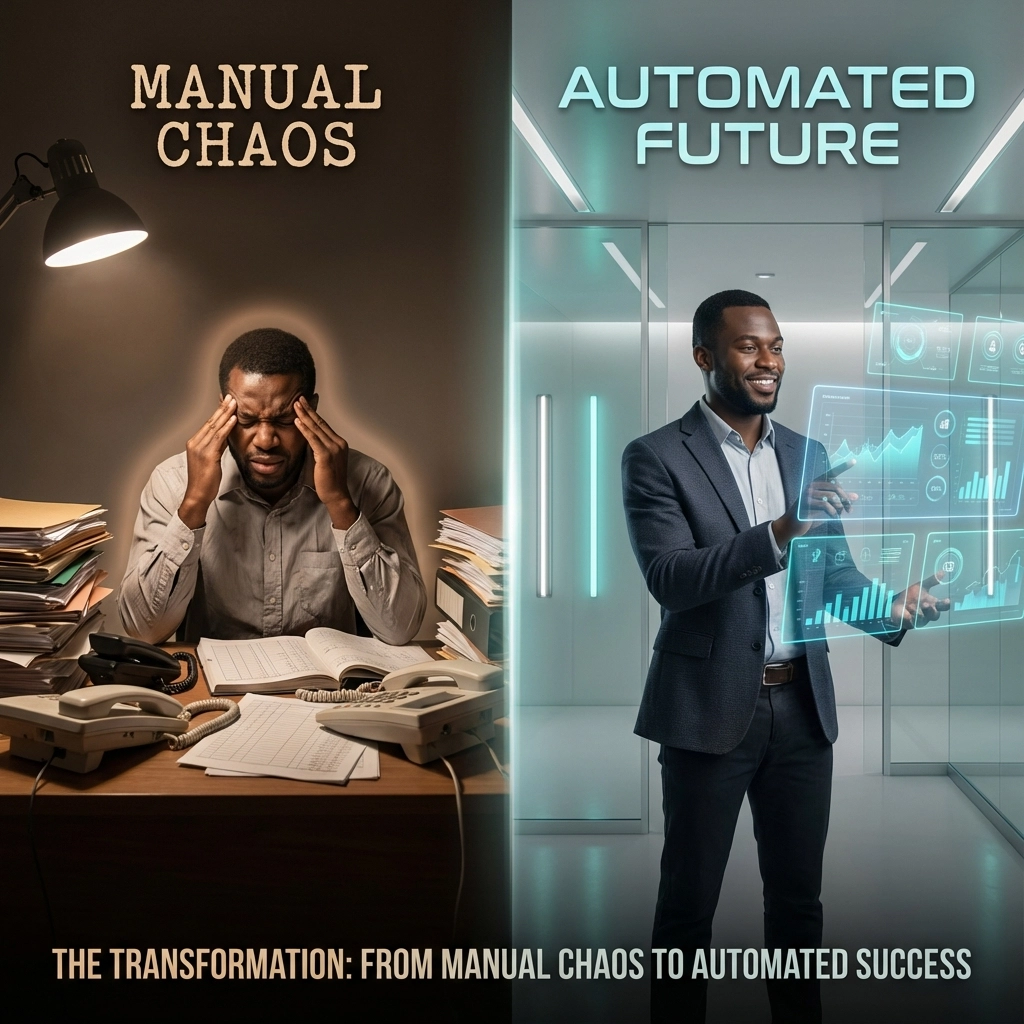
Ready to implement your own enterprise-level automation? Here's a step-by-step guide to create a customer onboarding automation that typically costs enterprises thousands to develop:
Step 1: Set Up Your Foundation (15 minutes)
Sign up for Zapier (free plan works for this)
Connect your email platform (Gmail, Outlook, or preferred provider)
Connect your CRM or customer database (even a Google Sheet works)
Step 2: Create Your Welcome Sequence Trigger (10 minutes)
Set trigger: "New customer added to spreadsheet/CRM"
Test the connection with a dummy entry
Verify the trigger fires correctly
Step 3: Build Your Automated Actions (20 minutes)
Action 1: Send personalized welcome email with company information and next steps
Action 2: Create calendar reminder for follow-up in one week
Action 3: Add customer to appropriate email marketing sequence
Action 4: Send internal notification to your team
Step 4: Personalize and Test (15 minutes)
Customize email templates with your branding
Add dynamic fields (customer name, purchase details)
Test the entire workflow with sample data
Refine messaging based on your brand voice
Total time investment: About one hour Ongoing time savings: 15-30 minutes per new customer Cost: Free to $20/month depending on volume
This automation replicates what enterprise companies spend thousands developing, but you can implement it this afternoon.
The Competitive Advantage: Why This Matters Now
The businesses implementing these automations today aren't just saving time: they're building sustainable competitive advantages. While competitors struggle with manual processes, automated businesses can:
Respond to inquiries 24/7 with intelligent chatbots
Nurture leads consistently without human intervention
Scale customer service without proportionally increasing staff
Maintain data accuracy across multiple platforms
Generate insights through automated reporting
The gap between automated and manual businesses will only widen as customer expectations increase and market competition intensifies.
Your Next Move: From Manual to Automated
The secret is out: enterprise-level automation is no longer exclusive to big business. SMBs across every industry are accessing powerful tools, implementing smart workflows, and competing on equal footing with much larger competitors.
The question isn't whether you can afford to automate: it's whether you can afford not to. Your competitors are already implementing these systems. Your customers expect the efficiency and responsiveness that automation enables. The tools are accessible, affordable, and designed for businesses exactly like yours.
Ready to join the automation revolution? Start with one high-impact workflow, prove the value, then scale from there. The enterprise-level capabilities you need are already within reach: you just need to take the first step.
For personalized guidance on implementing automation strategies that fit your specific business needs, explore our AI integration services and discover how Consultamind Systems can help you access the same enterprise-level tools that are transforming small businesses nationwide.
Comments